The UDRP, or Uniform Domain Name Dispute Resolution Policy to give it its rather unwieldy full name, will soon have its 25th birthday. This year also marks 24 years of Com Laude submitting formal disputes on behalf of our clients.
Given I’ve written, proofread or otherwise helped with nearly 3,000,000 words of UDRP submissions, I’ve decided to delve into our archives and share some memorable cases, and take you through what makes them unique.
The cases I’ve selected for future updates show just how intriguing domain name disputes can be.
The facts of each dispute are different and there are huge variations in how you approach them. Equally, there can be a wide range of issues to cover – tricky trade mark issues; unregistered rights relating to a personal name; or they simply have some quirky facts that give them a twist.
I’m starting with a case involving Scotland’s other national drink – IrnBru. Back in 2016, we acted for the Complainant – AG Barr – against an individual based in Glasgow. The decision was published by WIPO as A.G. Barr Plc v. Anthony Stewart – irn-bru.com [WIPO Case D2016-1407].
Scotland is one of the few countries in the world where Coca-Cola is not the best-selling soft drink. Instead, IrnBru rules. In fact, such is the brand’s fame that it has been used as a case study by the United Kingdom’s Intellectual Property Office, in which the IPO observed:
In Scotland, IrnBru is one of the most popular soft drinks. The equivalent of 12 x 330ml cans are consumed every second, on par with Coca-Cola and Pepsi. Coupled with unique and captivating marketing, Irn Bru has established itself as more than just a drink – it is now a fundamental part of Scottish culture.
And it ispart of the culture, after all a bottle of IrnBru is a trusted ally of those following the delicate path of recovery after a night of overindulgence.
Given this legendary background, you would expect our Glaswegian Respondent to know all about IrnBru. But that, apparently, was not the case. Not only had the Respondent never heard of the brand, but he had applied for (then withdrew without explanation) a trade mark for IRNBRU.
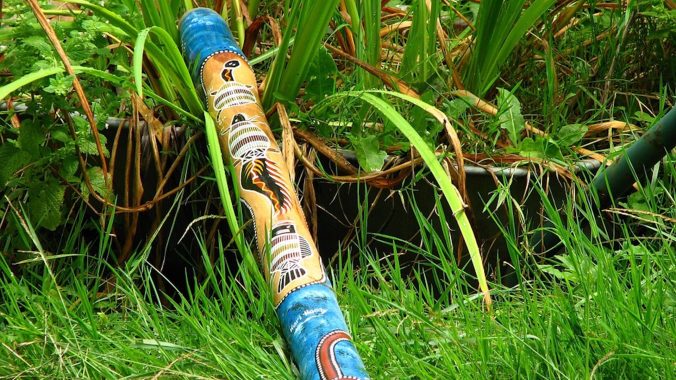
Further digging revealed that he had applied for his mark in class 15 for musical instruments. This, the Respondent suggested, was in order to create a business selling didgeridoos to the Scottish market. Scotland is perhaps not renowned for its love of Australasian wind instruments, but business niches do sometimes thrive.
The case even made the news. The Scottish Sun newspaper reported “DidgeriBru: Dad’s Horn Row With Ginger Giant” [Scottish Sun, May 15, 2016]. The Respondent was quoted as saying:
I like the idea of the IrnBru didgeridoo. I saw Prince Harry with a didgeridoo the other day and thought there might be a market…but they [the Complainant] have started throwing all these big guns at me. I want to win the case
We also saw that the Respondent had been party to a UDRP before, where he had registered two domain names relating to the iconic Scottish comedian Billy Connolly, namely billyconnolly.com and billyconnelly.com Billy Connolly v. Anthony Stewart [WIPO Case No. D2000-1549]
In that case, the crux of our Respondent’s defence was that the domain names had been registered with reference to his dog’s name “Rougemar Billy Connolly”. In its decision, the panel dryly noted
Certainly, changing the name of his Labrador to Rougemar Billy Connolly does not assist him.
The Respondent had tried to sell the domain names to the comedian, and this had been his downfall. With this in mind, we also suggested that the real reason Mr Stewart had registered irn-bru.com was to sell it to our client.
The panellist agreed and gave our Respondent short shrift.
As far as bad faith registration is concerned, the Complainant’s IRN-BRU trade mark is highly distinctive and has no other meaning except in relation to the Complainant. Furthermore, the Complainant’s registered trade mark rights in the term IRN-BRU predate the registration date of the Domain Name by 52 years, and have acquired considerable goodwill and renown worldwide, particularly in Scotland where both Parties are based. Under these circumstances, there is no question that the Respondent had knowledge of the Complainant at the time of registration.
I enjoyed this dispute, and it once again highlights the unique aspects of domain name disputes and the importance of safeguarding iconic brands. IrnBru, as such an iconic brand, deserved protection from those that sought to capitalise on its fame.
It also reminds me of the unpredictable nature of domain disputes, where didgeridoos and dog names can come into play!
A.G. Barr Plc v. Anthony Stewart – irn-bru.com [WIPO Case D2016-1407]
[Photo: Pixabay]